A car battery in the UAE typically lasts 2 to 3 years, compared with 4 to 5 years in cooler climates. High temperatures speed up the chemical reactions that corrode the plates and drive water out of the electrolyte. Any battery more than about 2 years old should be tested before summer.
The typical lifespan: 2 to 3 years
Two to three years is normal here. Some batteries fail sooner, a few last longer, and the result depends on how the car is driven and where it is parked. A battery that reaches four years in Dubai has done well.
This applies to every technology. AGM, EFB and flooded batteries all age faster in heat. Brand matters less than the date the battery was made, the conditions it lives in and whether the car charges it properly.
Why heat kills batteries
Heat speeds up every chemical reaction inside the battery, including the ones that destroy it. A common rule of thumb in the battery industry is that the rate of ageing roughly doubles for every 10°C rise above about 25°C. Under a bonnet in July the battery sits far above that.
Two things happen. The positive plate grids corrode faster, which cuts the current the battery can deliver. Water also leaves the electrolyte, by evaporation in flooded types and through the vents under overcharge in sealed ones. Less electrolyte means less working plate area.
Self-discharge rises with temperature too. A parked car in an open car park loses charge faster in summer than in winter, and a battery left partly discharged starts to sulphate.
Why call-outs rise in summer
Battery call-outs climb from late spring and stay high until autumn. The heat finishes off batteries that were already weak, and summer habits add to the load. The air conditioning runs flat out, trips are short, and many cars are left parked for weeks while their owners travel.
Failure is often sudden. A heat-damaged battery can start the car normally in the morning and refuse in the afternoon after an hour in the sun. There is not always a slow-crank warning first.
When to test
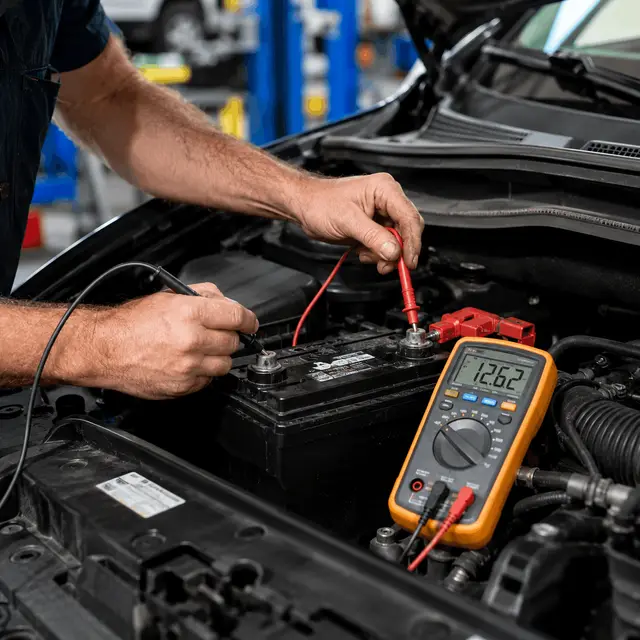
Test any battery over about 2 years old before summer, in April or May. A proper test measures state of health, not just voltage, so it catches a battery that still starts the car but has little reserve left.
Test sooner if you notice any of the signs below.
- The engine turns over more slowly than it used to, especially after the car has stood in the sun.
- Stop/start has stopped working in normal driving.
- A battery warning or low battery message has appeared, even once.
- The case is swollen, or there is white or green crust on the terminals.
- The car needed a jump start and you do not know why.
Habits that extend battery life
You cannot change the climate, but you can keep the battery fully charged and a little cooler. Both slow the damage.
- Park in shade or a basement when you have the choice.
- Take a drive of 30 minutes or more at least once a week, so short trips do not leave the battery undercharged.
- Do not sit with the ignition on and the engine off for long periods.
- If the car will be parked for more than two weeks, use a smart maintenance charger or ask someone to drive it.
- Keep the terminals clean and tight, and have the charging voltage checked whenever the battery is tested.
- Fit the correct technology and size for the car, and have the BMS reset on cars that have one.
Related pages
- Car Battery Testing
- Car battery replacement in Dubai
- Car battery replacement in Abu Dhabi
- Battery or Alternator? How to Tell Which One Has Failed
- Range Rover Velar Battery Replacement: What Owners Should Know
- Range Rover "Low Battery Please Start Engine": What It Means and What to Do
- AGM vs EFB vs Flooded Car Batteries: Which One Does Your Car Need?